Shopping Cart




Overcoming Fear of the Dark: A Children’s Book to Help
Overcoming Fear of the Dark: A Children’s Book to Help

Why Do Children Fear the Dark?
For many children, bedtime is a difficult moment, especially because when the lights go out, their imagination can play tricks. But why do children fear the dark? Darkness represents the unknown, and just as this can frighten adults, it can affect children even more. Darkness can be seen as a huge box holding all of a child’s fears. Fear is a primary emotion, common to everyone. It originates from the survival instinct and acts as an alarm for dangers — both internal (e.g., imagined) and external (like the fear of darkness). Our book, Dark Wolf, explores the fears and physical and psychological sensations the dark can provoke in children. The book validates these emotions, giving them words and images to normalize fear for young readers.
%20copia.jpg)
The Authors
Chiara Ravizza wrote Dark Wolf. After earning a degree in Educational Sciences, she specialized in Pedagogical Sciences. She has worked as an early childhood educator and currently supports children with disabilities. Chiara uses children’s writing to help process emotions, giving young readers symbolic and imaginative ways to understand and express feelings.
Since 2020, she has collaborated with illustrator Susanna Covelli, who studied Architecture and teaches at the Comics Academy in Turin. Susanna’s illustrations, experimenting with colored pencils, acrylics, watercolors, oils, and digital art, make Dark Wolf an even more valuable tool for parents.

How to Help Children Overcome Fear of the Dark
The picture book Dark Wolf is a helpful ally for parents facing children’s fear of the dark. The book encourages children to express sensations experienced at night. Even the title is evocative: the words “dark” and “wolf” naturally evoke fear, because the wolf symbolizes what is most frightening in darkness. Through this book, children learn that even the wolf can be afraid, showing that fear is normal and even the “most monstrous” creatures can feel it. In the end, the wolf becomes a friend and bedtime companion, symbolizing overcoming fear and confronting imaginary anxieties.

Tips for Supporting Children with Fear of the Dark
In addition to Dark Wolf, Chiara recommends the following strategies:
-
Give children a voice for their emotions and sensations, using empathetic, non-judgmental language (avoid saying “don’t be scared” or “don’t be a baby”).
-
Explore the dark together with a parent or siblings using a flashlight to discover there’s nothing scary in the wardrobe, under the bed, or in corners.
-
Create bedtime rituals, like reading a book and highlighting a “fear-busting” phrase. For example, in Dark Wolf:
-
“Goodnight little wolf, keep this lovely kiss and hug your pillow tight.”
-
“And if the wolf hears me in the dark, sad, sad? Oh no, he can’t resist the dark — he’s afraid too!”
-
-
Leave a nightlight on in the room.
-
Provide a transitional object, like a bedtime stuffed toy, to give comfort and a sense of security — just like the wolf for the protagonist of Dark Wolf.
Does your child fear bedtime? If so, did Dark Wolf and these tips help? Share your experiences in the comments!
https://www.youtube.com/embed/Ulnc5ilGyuw
Related product
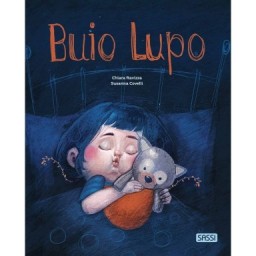
Buio Lupo
Old price: €15.90
Price: €12.72
Discount: 20%
Save up: -€3.18
Un albo delizioso che affronta con tatto la paura del buio, fornendo ai più...