Shopping Cart




How to Explain the Death of a Pet to Children
How to Explain the Death of a Pet to Children

It can be difficult to imagine the pain caused by the death of a beloved pet if you’ve never had one. For many people, such a loss is comparable to losing a family member or a dear friend — a tragic experience that can test even adults. It is no surprise, therefore, that the death of a pet can leave children with a deep sense of emptiness, made even harder by not fully understanding what has happened to their furry friend.
It is up to parents to find a way to explain to their children why they can no longer play with their beloved dog, or why calling their cat’s name no longer brings a happy meow in response. Often, parents use euphemisms to explain a pet’s death — phrases that may make sense to adults but can confuse children:
“Fluffy isn’t here anymore.”
“But where has she gone?” a child will immediately wonder.
For this reason, psychologists such as Dr Gloria Borromeo recommend situating the pet in an afterlife, which may vary depending on each family’s values, but which should remain a place of imagination and not a physical location. Above all, it is important to allow the child to express their feelings and face this difficult time without restrictions or reproach for the complex emotions they experience.

Activities to Help Children Cope with the Death of a Pet
Play is an invaluable tool during childhood, especially in times of grief, as it allows children to distract themselves and release emotions in a healthy and creative way. Here are some activities that may help children process the loss of a pet:
-
Write a letter: If the child is old enough to write, it can be helpful to compose a letter recalling the many happy moments spent with their furry friend, thanking them for their love, and saying a final goodbye.
-
Draw a portrait: Suitable for all ages, drawing a portrait of the pet — perhaps together with the family — can be a comforting way to honour their memory and hang it up as a reminder of joyful times.
-
Share memories: An idea requiring no materials and suitable for all ages is to gather as a family and share favourite memories of the pet, creating both a moment of closeness and an opportunity to explain the loss to the child.

Books to Explain the Death of a Pet to Children
Books are a powerful resource to help children understand the loss of a pet. Full of metaphors, illustrated stories can often be more effective than words alone, allowing children to process such a painful experience.
-
Beyond the Rainbow: Anita’s parents tell her that her cat Ottone is gone. But Anita doesn’t understand: what does it mean that he is gone? Is he lost? Has he found a new family? Through gentle words and small gestures, her parents help her realise that although Ottone is no longer physically there, he remains with them always — and that love is strong enough to go beyond the rainbow. This illustrated book is dedicated to all those who have lost the companionship of a pet, showing that even if they have crossed the Rainbow Bridge, they remain forever by our side.
However you choose to guide your children through this sad event, it is essential to focus on their well-being, never minimising the emotions caused by the loss of their beloved companion. And if needed, do not hesitate to seek help from professionals such as Dr Elisa Silvia Colombo and Dr Gloria Borromeo, whose advice inspired this article.
https://www.youtube.com/embed/HadQV6nOAuk?si=a04CgXOaaxQBvtOQ
Related product
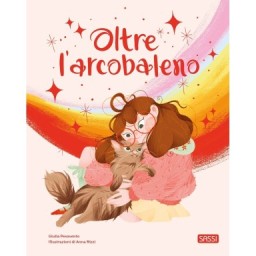
Oltre l'arcobaleno (Outlet)
Old price: €15.90
Price: €11.13
Discount: 30%
Save up: -€4.77
Un libro illustrato dedicato a tutti coloro che hanno perso la compagnia dei...