Shopping Cart


Holocaust Memorial Day: how to explain the Shoah to children with sensitivity
Holocaust Memorial Day: how to explain the Shoah to children with sensitivity

On 27 January, Holocaust Memorial Day, we observe a moment of collective reflection to remember the victims of the Shoah and to pass on the values of peace, respect and inclusion. Explaining this commemoration to young children is not simple, but it is essential to develop their historical awareness and the principles that help build a better future.
Explaining Holocaust Memorial Day to children gives parents and teachers an opportunity to introduce important themes with delicacy and care.
Talking about the Shoah with children is not just recounting a dark chapter of history; it is teaching that memory is a moral guide to help prevent such atrocities from happening again.
Why it is important to talk about the Shoah with children
Educating through memory: a duty towards future generations
Historical memory is not only a duty to the victims of the Shoah but also an essential tool to raise children who understand justice, empathy and respect for others. Talking about the Shoah with children helps them appreciate the value of tolerance and inclusion as the foundation of a fair society.
How to tell children about the Shoah
It is crucial to adapt the language to the child’s age:
-
Ages 6–8: introduce concepts such as fairness and respect through simple, positive stories.
-
Ages 9–12: provide a basic historical context, explaining the Shoah in a comprehensible but non-traumatic way.
Explaining the Shoah to children therefore means addressing difficult issues with stories and words that respect their sensitivity.

A special book to explain the Shoah to children: a valuable resource
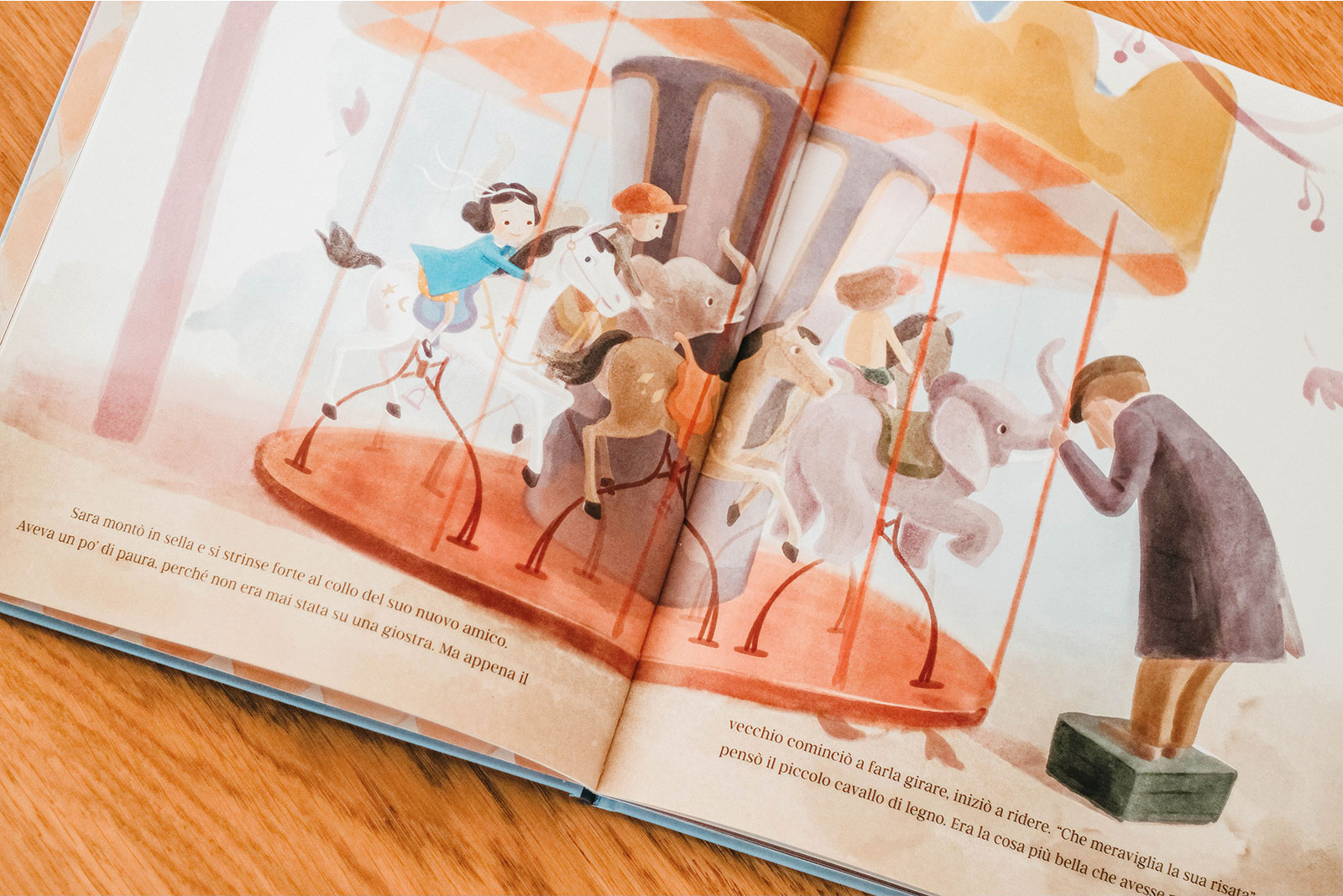
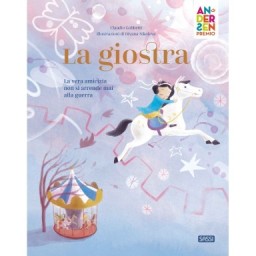
Children’s books about the Shoah are powerful educational tools. Among them, The Carousel stands out for its ability to convey profound messages with gentleness and feeling.
The story follows the friendship between Sara, a young Jewish girl, and Theo, a carousel horse. War breaks their bond: Sara is first confined to a ghetto and then deported to a concentration camp.
The Carousel is an example of a Holocaust book for children that helps make the Shoah accessible, while encouraging reflection and the development of empathy towards those who suffered discrimination.
How to use a Holocaust book at school or at home
At school:
-
Organise a shared reading of The Carousel and follow it with a creative workshop (drawings, short written reflections).
-
Link the reading to Holocaust Memorial Day and lead a guided discussion where pupils can express their feelings and discuss themes like respect, diversity and human rights. This method is particularly effective in primary schools.
At home:
-
Parents can read The Carousel with their children and use it as a starting point for open conversations about memory, respect and tolerance. Asking simple questions and listening to children’s responses helps transmit the values behind Holocaust Memorial Day.
Memory as a bridge to the future
Talking about the Shoah with children is a responsibility that parents and teachers must embrace with sensitivity. Passing on memory to new generations through Holocaust books for kids and creative activities teaches universal values.
Memory is the bridge to a better future — let us walk it together.
https://www.youtube.com/embed/mGGILLlfRcY?si=aLM4R-Jc8tMl4Y8C
Related product
La giostra
Old price: €17.90
Price: €14.32
Discount: 20%
Save up: -€3.58
Un racconto che narra di un’amicizia speciale nata durante uno dei periodi...